Introduction
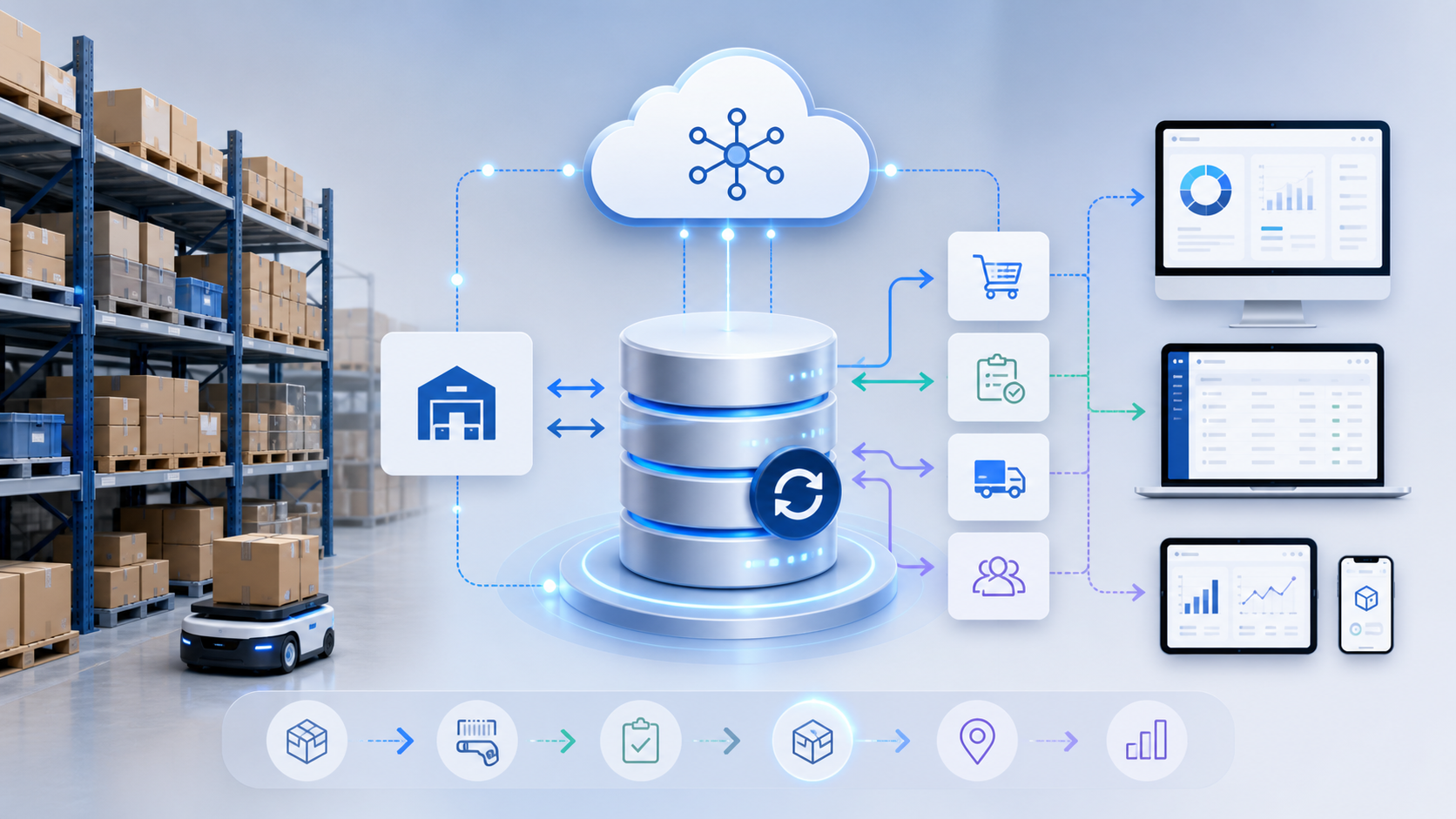
This walkthrough follows a single part number from internal product control to external B2B discoverability. The source deck shows how inventory data, product detail quality, warehouse visibility, and exchange eligibility connect into one commercial loop.
Start with a Controlled Inventory Record
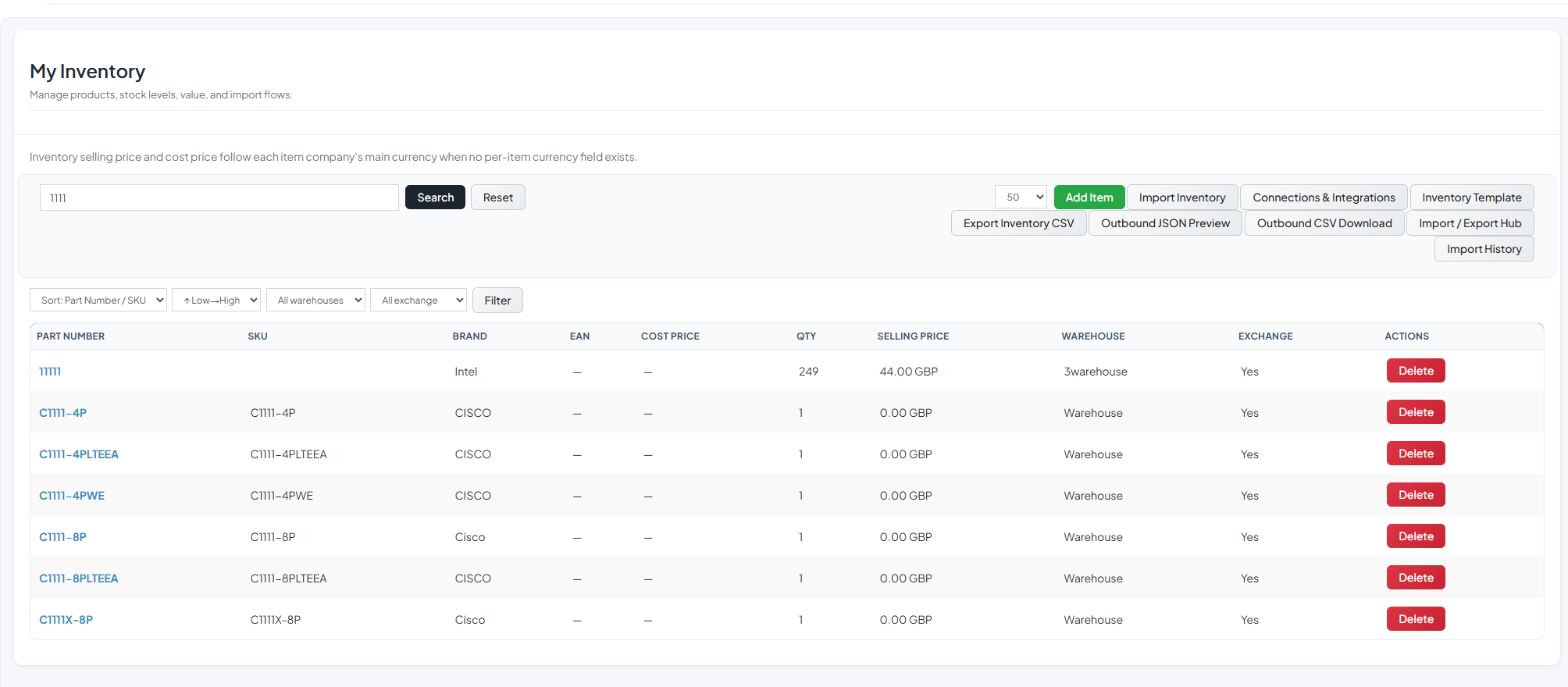
The flow starts in My Inventory, where teams manage stock, value, import-related activity, and exchange eligibility in one place.
In the deck, part number and SKU are the anchor for both internal stock operations and later external discovery.
Build a Sellable Product Detail
The product-detail step captures commercial context such as title, description, brand, condition, identifiers, and pricing readiness.
The presentation emphasizes that richer product content and images improve buyer evaluation and trust before first contact.
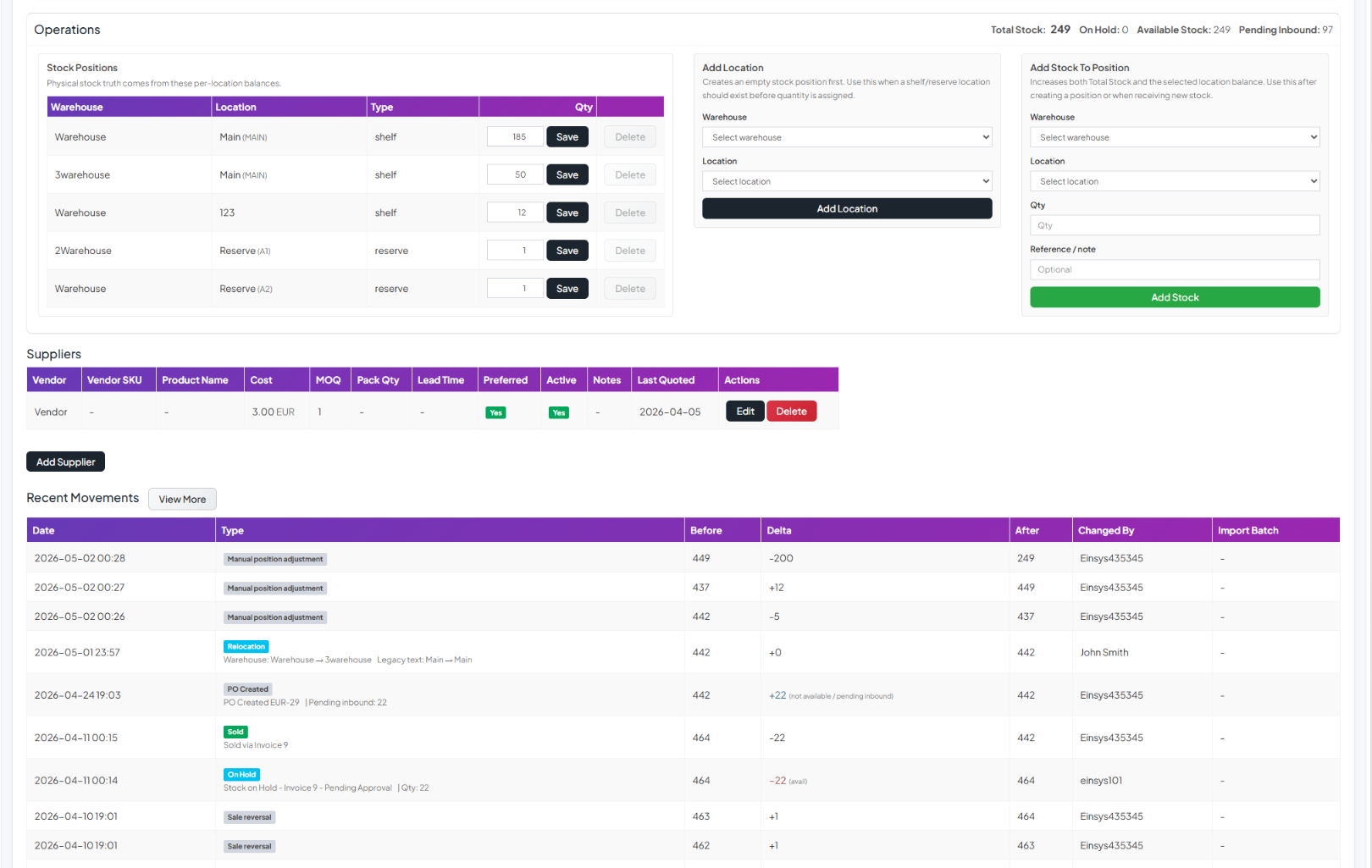
Keep Quantity Truth Visible Under the Product
Warehouse and movement data explain what quantity actually sits behind the listing opportunity.
The source deck connects totals, availability context, warehouse location visibility, and supplier rows so teams can source with clearer confidence.
Expose Eligible Stock Through Stock Exchange
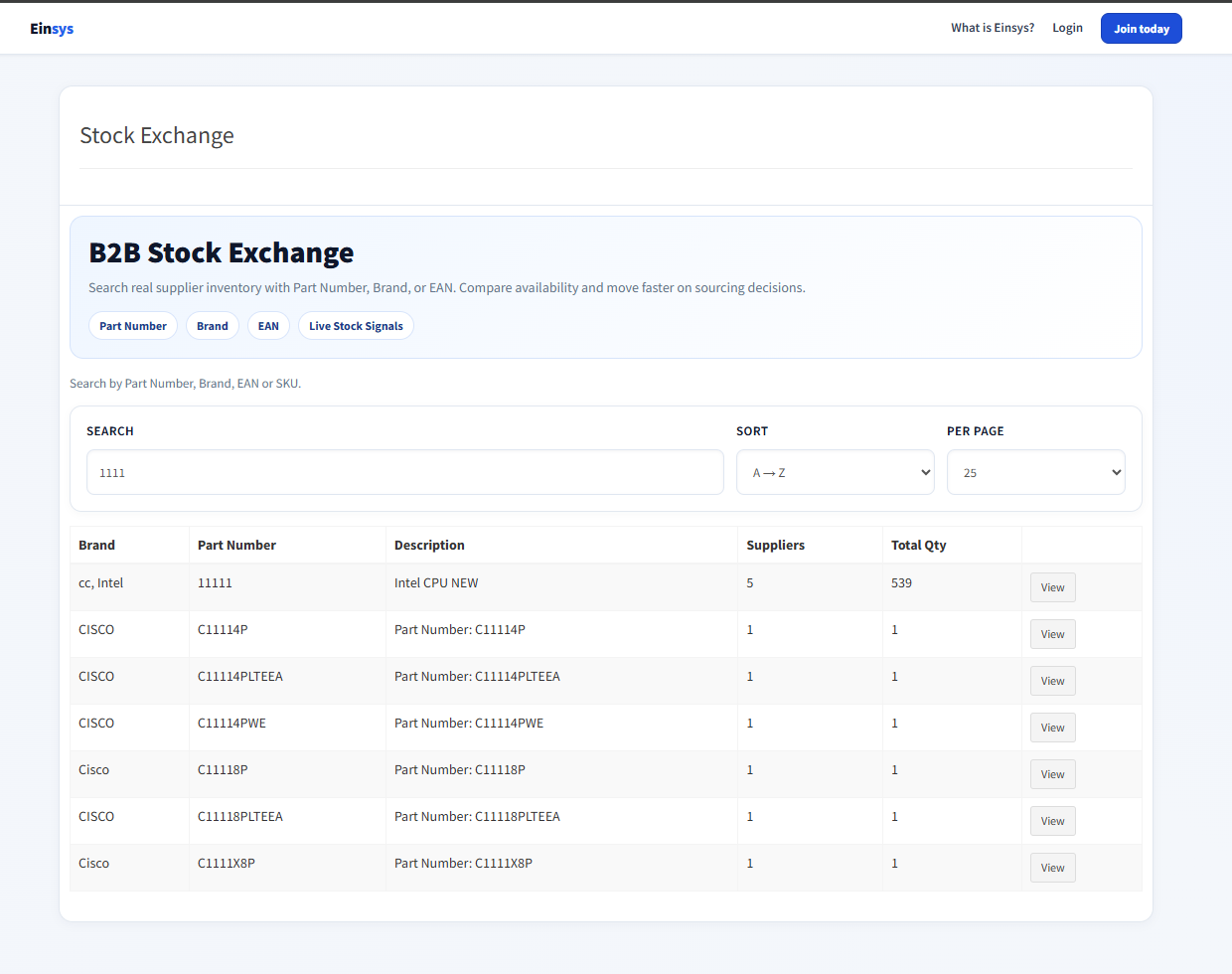
Once marked eligible, stock is discoverable in Stock Exchange by part number, brand, EAN, and SKU search patterns shown in the slides.
The same part number can aggregate supply options, helping businesses compare availability faster.
Capture Public Discovery and Comparison Demand
The deck also shows public discovery paths, where non-members can encounter stock signals before account conversion.
At comparison stage, one part number becomes a consolidated supplier view with quantity, condition, and pricing context.
Use Price and Quantity History as Market Signal
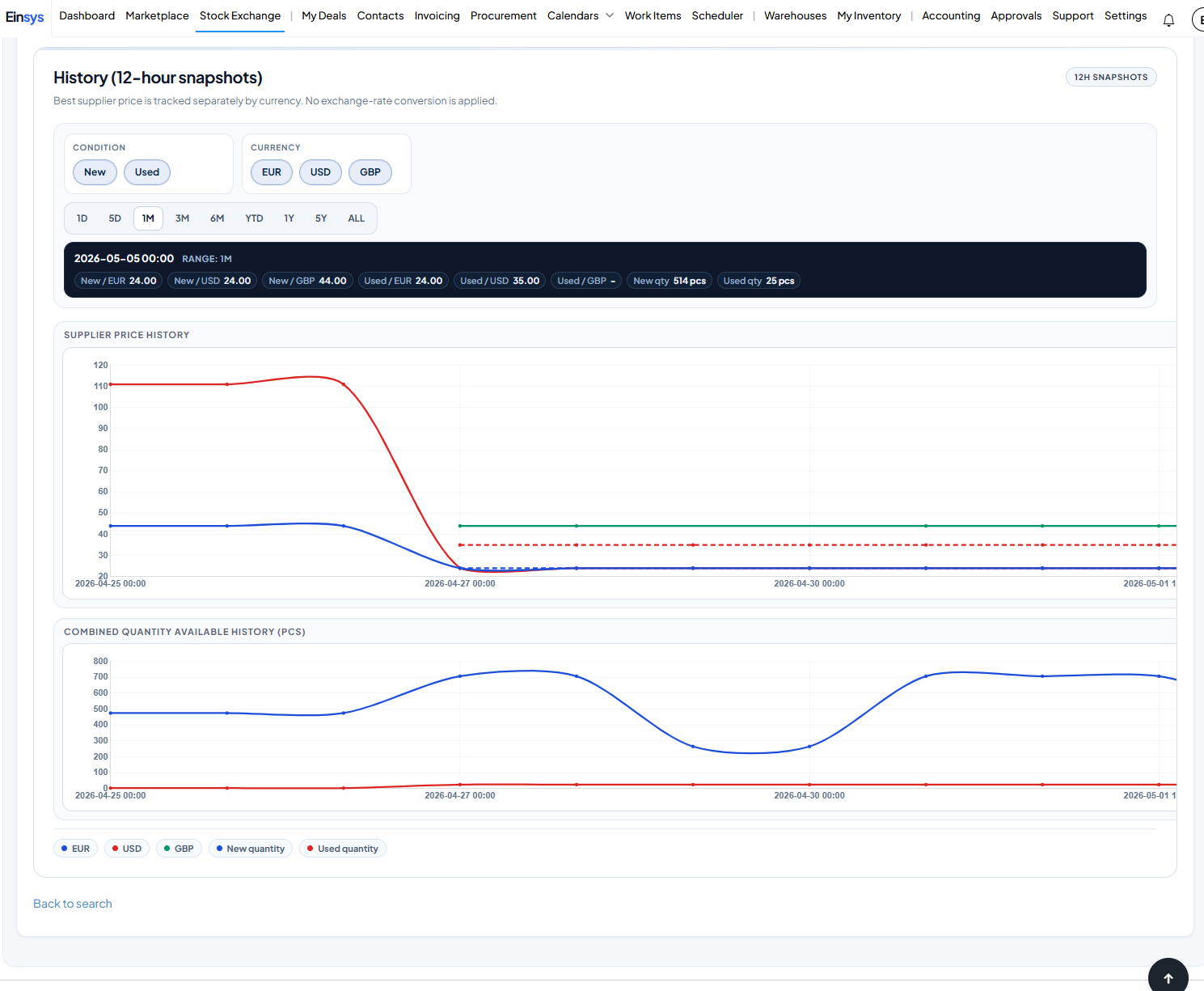
Historical pricing and quantity lines are presented as a decision aid for timing and sourcing strategy.
This creates a repeatable loop: add product, expose eligible stock, capture demand, compare suppliers, and feed new insight back into purchasing decisions.
The Commercial Loop in One Narrative
The closing slide summarizes the cycle from inventory record to discoverable stock, from supplier demand to trend analysis, keeping sourcing and commercial actions connected.
Key Takeaways
- A single part number can power both internal stock control and external B2B discovery.
- Exchange eligibility, product quality, and quantity visibility work together to improve sourcing outcomes.
- Historical price and quantity views turn listings into actionable market intelligence over time.