
Introduction
This deck presents a clear operational sequence: publish a marketplace opportunity, receive and evaluate bids, award the preferred bidder, and continue directly into payment and logistics follow-through inside the same working context.
Start in Marketplace with Clear Intent
The workflow begins on the Marketplace list where teams choose Want To Buy or Want To Sell and create a public opportunity.
The slide narrative focuses on reducing handoffs from first listing through award and fulfilment.
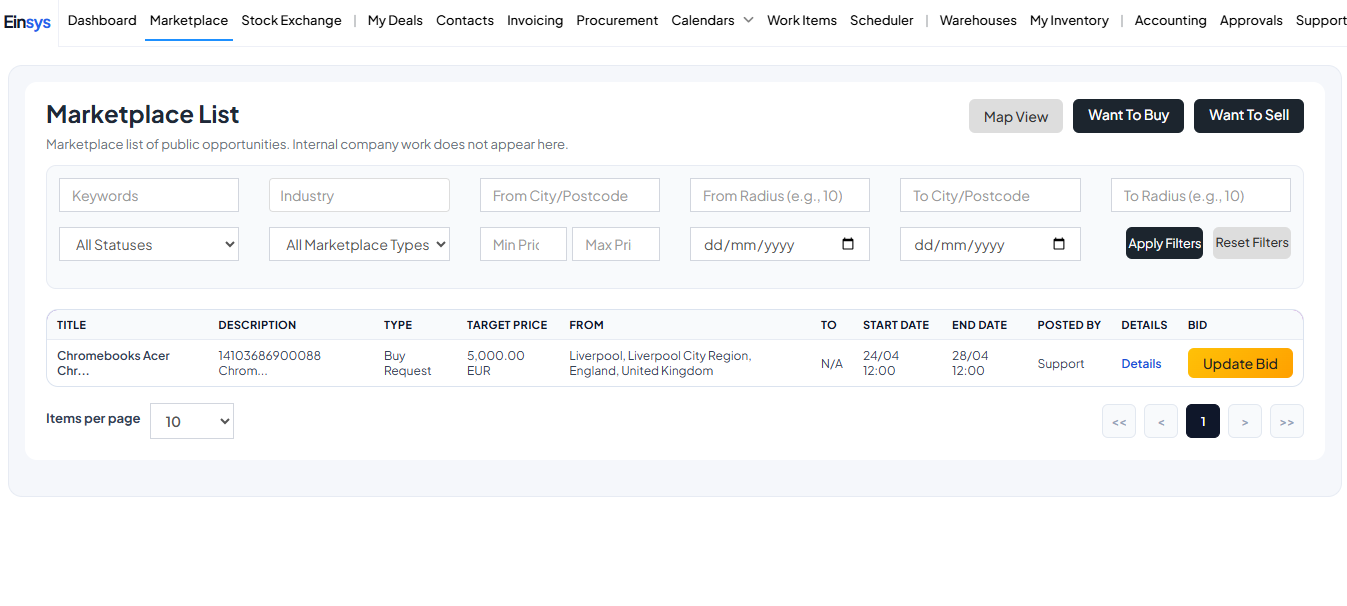
Post the Opportunity with Real Commercial Detail
The deck highlights a structured posting step with product rows, quantity and condition context, target pricing, date windows, and location information.
This improves bidder understanding and leads to stronger offer quality.
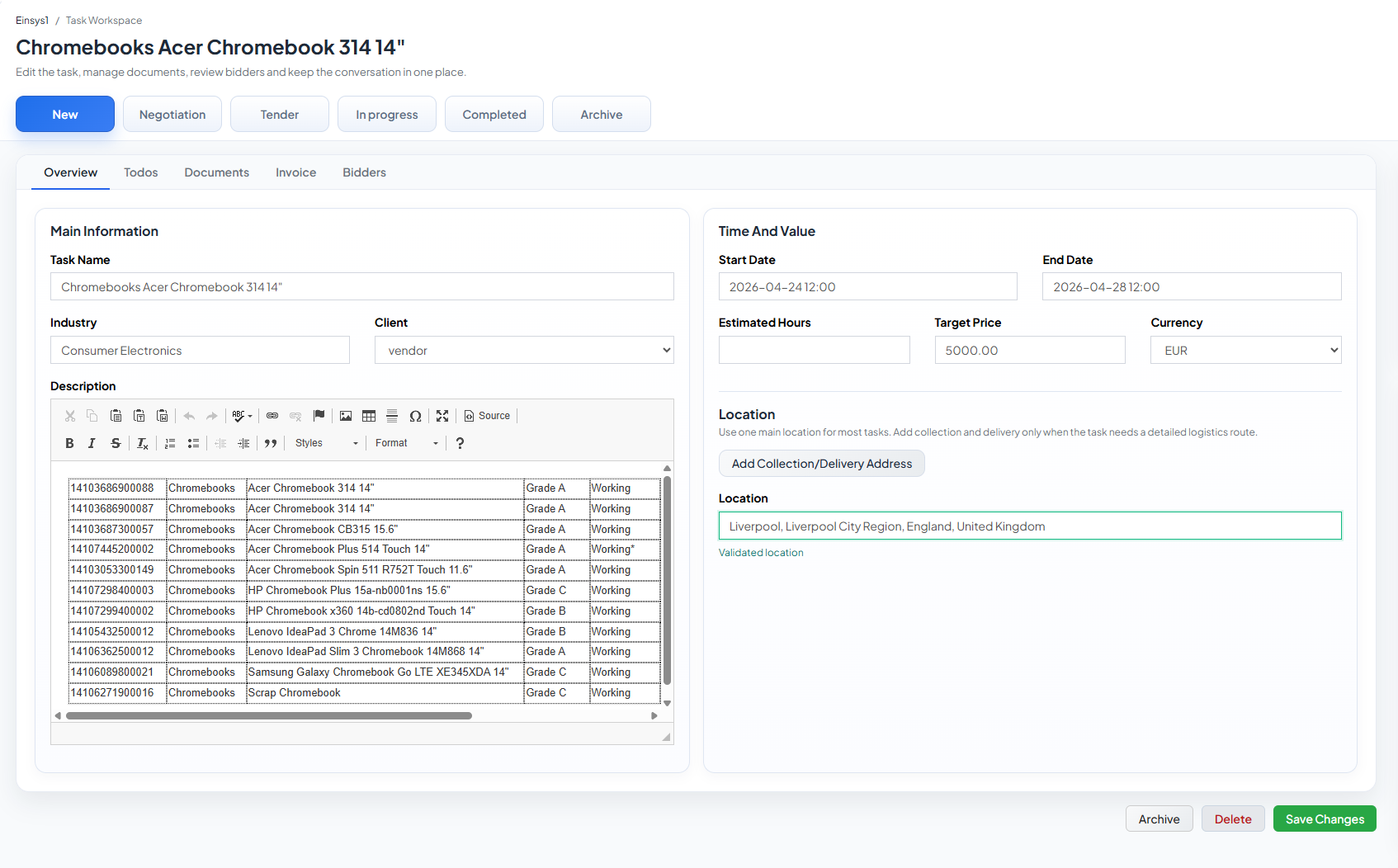
Receive and Update Bids in the Same Flow
Bidders can find the listing and submit or update an offer directly from Marketplace, keeping negotiation input connected to the original opportunity.
The source slides describe this as a faster path from interest to comparable commercial options.
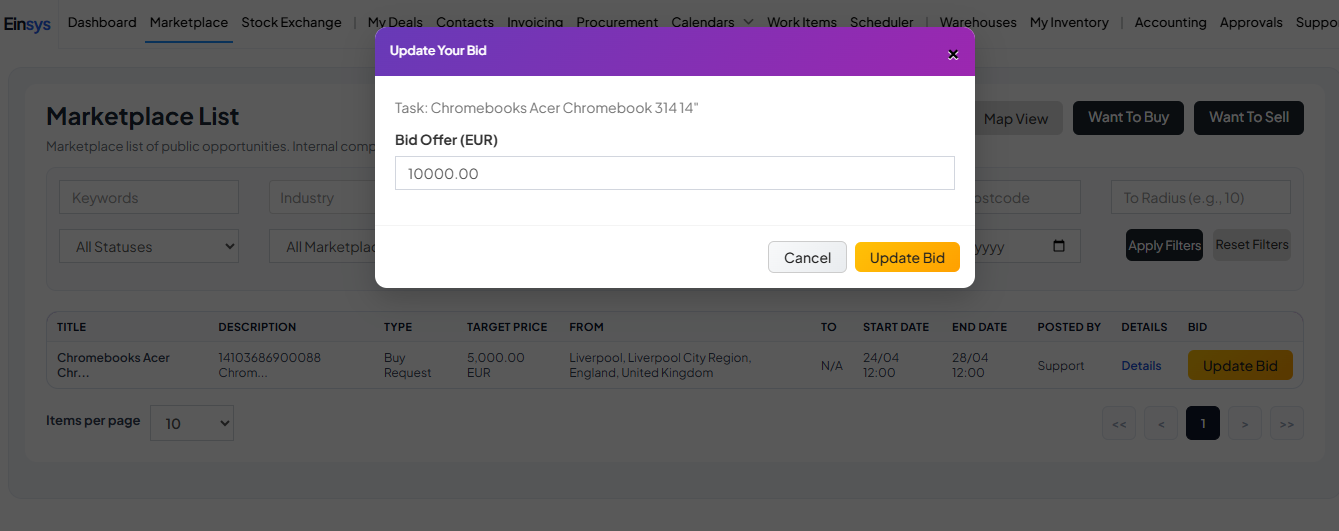
Review and Award in My Deals
After a bid is submitted, the owner reviews bidder requests in My Deals and awards the opportunity from that workspace.
This centralizes commercial decision-making in the same thread of work created from the marketplace post.
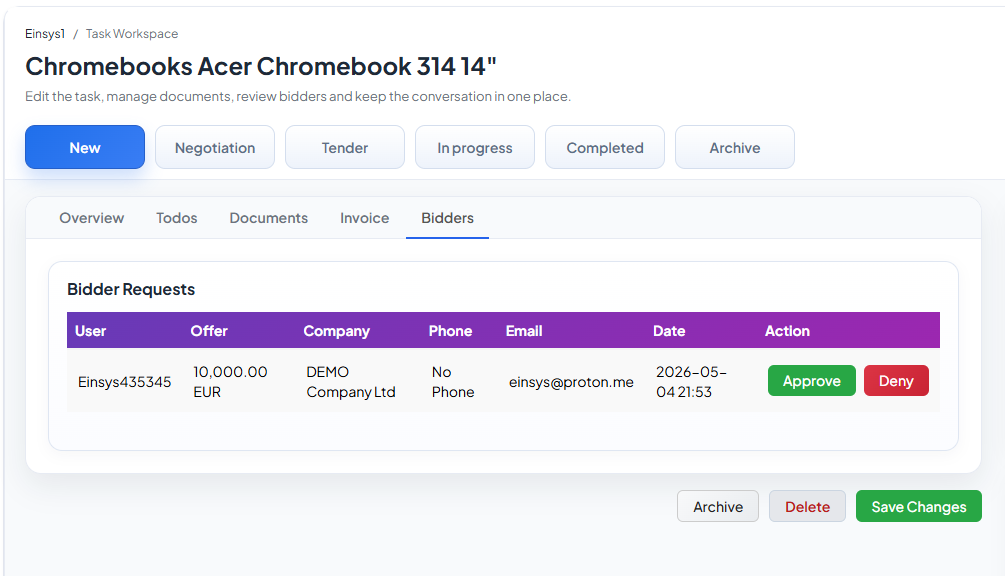
Continue into Payment and Logistics Without Context Loss
The final steps in the deck show payment confirmation, logistics tasks, and shipment tracking connected to the awarded bid inside one operational workspace.
The stated outcome is clearer ownership, fewer cross-tool handoffs, and faster transition from award decision to fulfilment execution.

Complete Marketplace-to-Shipment Flow
The close summarizes the full sequence: post, bid, review, approve, payment check, logistics execution, and tracking.
As presented, the value is continuity from public demand capture through operational delivery.
Key Takeaways
- Marketplace posting, bid intake, award, and fulfilment are shown as one connected business flow.
- My Deals acts as the operational bridge between commercial decision and delivery action.
- Reducing handoffs improves speed, accountability, and shipment readiness.